Factory Audit Checklist: What Drinkware Buyers Should Actually Check
If you are searching "what does a factory audit check", you are usually one decision away from a real order. This checklist splits an audit into the two parts that matter — capability and social compliance — with a documents list, the red flags, and an audit-rights clause for your contract.

An audit is not a box to tick on a supplier scorecard. It is the difference between a factory that can hit your specification and one that can only show you a catalogue. The mistake most first-time importers make is treating "factory audit" as a single event — when in practice there are two very different checks, and confusing them is how a buyer ends up with a trading office that rents a floor for the day you visit.
01 Two Audits, Not One
Before you schedule anything, separate the two questions an audit answers:
- Capability audit — can this supplier actually make your product, to your spec, at your volume, batch after batch? This is about machines, process control and QC.
- Social compliance audit — is the workplace run in a way you can defend to your own customers, your retailer, and your conscience? This is about labour, safety and environment.
A supplier can pass one and fail the other. A shiny, compliant office with no real production line is a capability fail. A skilled workshop with no documented labour standards is a compliance gap. Score them separately.
02 Capability Audit: The Production Reality
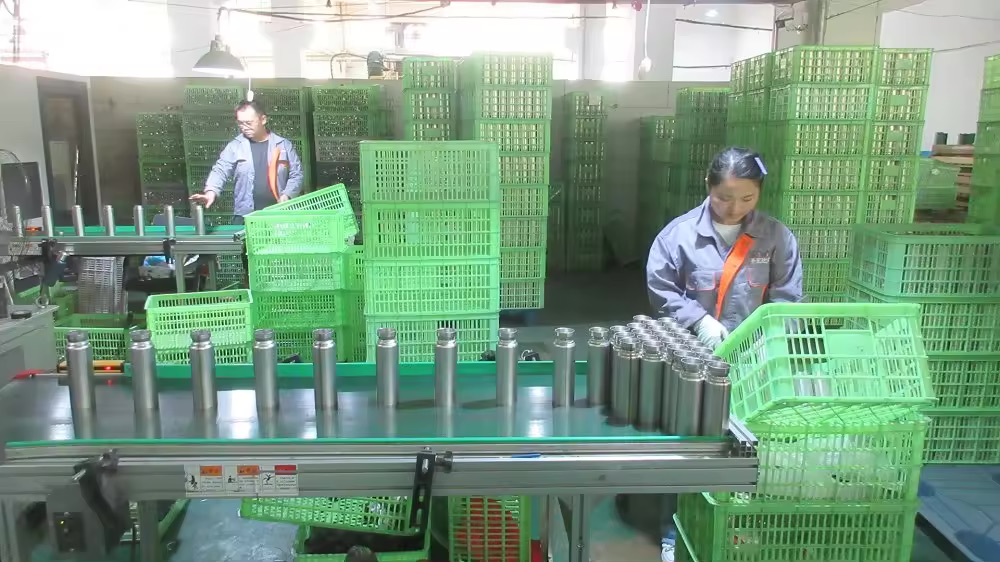
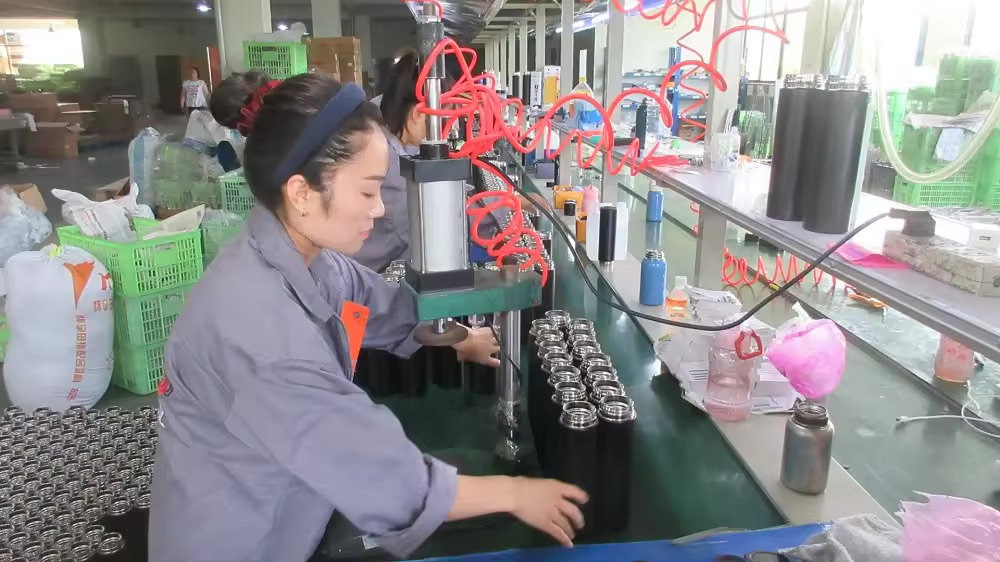
This is the part that decides whether your bottles leak, hold temperature, and arrive on time. Walk the line and check each item below — "good" is what you want to see, "red flag" is what sends you home.
| Area | What to check | What good looks like | Red flag |
|---|---|---|---|
| Equipment | Welding, vacuum, spray, injection, printing | Owned and running, matched to your product type | Only a sales office; line is "next door" or subcontracted without disclosure |
| QC system | Incoming material, in-process, final AQL | Recorded checks at three stages, with the AQL plan on file | "We check by eye" with no log, no plan |
| Capacity | Real monthly output vs your order | Headroom so your order does not block the line | Quotes a lead time it cannot name a reason for |
| Sample-to-bulk | Approved sample vs first bulk | Matched finish, weight, vacuum performance | Bulk visibly differs from the signed sample |
| Traceability | Material and lot records | Batch numbers link material to finished cartons | No record of which steel or coating was used |
03 Social Compliance Audit: The People Side
This is what your own retailer or distributor will ask about, and what protects you if a journalist or a competitor ever asks where your goods come from. The recognised frameworks here are third-party audits — SGS, TUV, BV, Intertek, and BSCI on request.
| Area | What to check | Evidence to ask for |
|---|---|---|
| Working hours & wages | Legal limits, paid overtime | Payroll vs attendance records |
| Age verification | No underage labour | ID checks on file for every worker |
| Health & safety | Guarding, PPE, fire exits | Safety training log, inspection record |
| Environment & permits | Waste, coatings, discharges | Valid operating and environmental permits |
| Certifications | Management & social systems | ISO 9001, and a third-party social audit report (SGS / TUV / BV / Intertek / BSCI on request) |
04 Documents to Request Before You Fly
A site visit is expensive; don't waste it discovering what a PDF could have told you. Request these first and read them before booking a flight:
- Business licence — confirms a real, registered entity and its scope.
- ISO 9001 — a baseline quality-management system (management, not a product certificate).
- Material and food-contact certificates — SGS / LFGB for the steel, coating and any plastic in contact with liquid.
- Export records — bills of lading or customer references that prove they actually ship the product type you want.
- Any audit report — capability or social, current and named.
05 Red Flags That Disqualify a Supplier
You do not need a 40-page report to walk away. Any of these, on their own, is enough to keep looking:
06 The Audit-Rights Clause for Your Contract
Copy this and fill the brackets. The point is to make the audit a committed condition, not a favour:
Audit rights: The buyer has the right to conduct or commission a capability and/or social compliance audit of the production premises before and during the production of [order reference]. The supplier shall provide access to the actual production line, QC records, and relevant certifications (including ISO 9001 and, where required, a third-party social audit such as SGS, TUV, BV, Intertek or BSCI). If the audit reveals a critical capability or compliance failure, the buyer may withhold payment, require corrective action, or cancel the order without penalty. The cost of a buyer-commissioned third-party audit is borne by [the party named].
07 Talk to STWADD About Your Audit
Request an audit-ready supplier brief Free sample
Tell us your product, volume and target market and we will return, in writing:
- the capability and compliance posture of the partner line we would qualify for your order;
- which certificates we already hold (ISO 9001, SGS / LFGB food-contact) and which third-party social audit we can arrange for you;
- the inspection plan — including the AQL level and the defect classification we apply on every batch.
Sample policy: we send a sample free of charge — you pay only the freight, no deposit. The audit-rights clause above is offered as standard in the framework we propose.
WhatsApp +86 150 8822 8843 · Email bob@stwadd.com
We are a factory-backed supply company in Yongkang, Zhejiang: production runs to your specification at audited partner factories we qualify and work with directly, and every batch passes the inspection plan before the container is sealed. Our OEM and ODM page covers sampling, lead times and inspection, and the 2026 catalogue lists every in-stock model if a stock mould with your finish is the faster route.